Boosting Agricultural Efficiency with Renewable Energy: Integrating Energy Production and Farming
Introduction
Agricultural facilities such as greenhouses, livestock farms, irrigation systems, and cold storage warehouses are among the largest energy consumers in rural economies. Rising fossil fuel prices, climate-related risks, and increasing competition in global food markets make renewable energy integration not only desirable but essential.
By combining renewable energy production with agricultural operations, farms can achieve greater economic efficiency, sustainability, and resilience. International best practices — highlighted by REN21, Fraunhofer ISE, and industry reports — already demonstrate the benefits. Türkiye, with its rich solar and geothermal resources, has the potential to become a regional leader in renewable-powered agriculture.
Energy Demands in Agricultural Facilities
The main energy requirements in agricultural operations include:
- Heating and cooling (greenhouses, livestock barns, cold storage)
- Pumping and irrigation
- Ventilation and lighting
- Food processing and refrigeration
For example, greenhouses may consume 350–500 kWh/m² annually for heating in colder climates, while cold storage warehouses require 30–50 kWh/m³ per year for refrigeration. These high and often seasonal demands make agriculture an ideal candidate for renewable energy integration.
Renewable Energy Solutions for Agriculture
1. Photovoltaics (PV) and Agrivoltaics
- PV Systems: A typical 1 MWp solar plant can generate 1,500–1,800 MWh annually in Türkiye, enough to power irrigation and cooling systems.
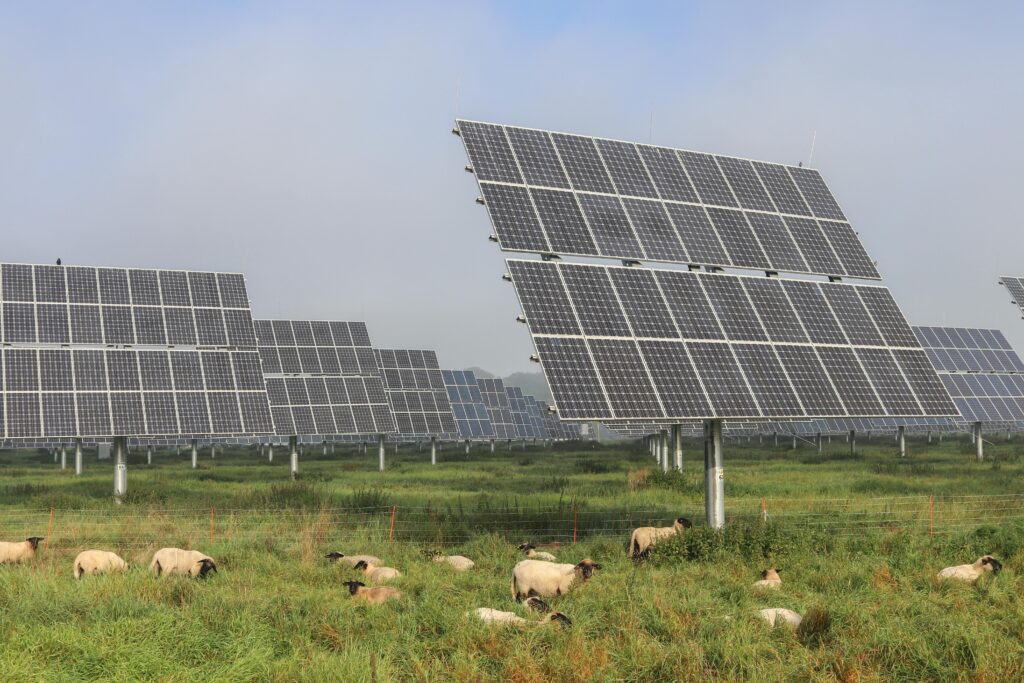
- Agrivoltaics (APV): PV panels installed above cropland provide partial shading, reducing evapotranspiration by up to 20%. This improves water use efficiency while supplying electricity.
- International Example: The Fraunhofer APV-Resola project in Germany showed that land-use efficiency can exceed 160% when farming and energy production are combined.
2. Solar Thermal Heating
- Useful for hot water in livestock facilities or low-temperature greenhouse heating.
- Can reduce natural gas demand by 20–40% when integrated with floor heating systems.
3. Geothermal and Ground-Source Heat Pumps
- Türkiye ranks 7th globally in geothermal resources, with over 1,500 MW installed capacity.
- Greenhouses in Aydın, Manisa, and Afyon already use geothermal heating.
- Heat pumps achieve COP values of 3.5–5.0, cutting heating costs by up to 70%.
4. Biogas and Biomethane
- Türkiye produces 45 million tons of manure annually, much of it untapped.
- Biogas plants convert waste into electricity, heat, and organic fertilizer.
- A 1 MW biogas CHP plant can power ~3,000 households while processing animal manure sustainably.
5. Energy Storage
- Thermal storage: Large hot-water tanks (200–1,000 m³) allow solar or biogas heat to be shifted across day/night cycles.
- Battery storage: Short-term systems stabilize PV use and reduce peak grid demand.
Integration Strategies for Maximum Efficiency
- PV + Heat Pump Hybrids: Solar electricity powers heat pumps, multiplying heat output by up to 4–5 times.
- Agrivoltaics: Dual land use increases crop resilience and reduces water demand.
- Biogas CHP + Heat Recovery: Provides both electricity and useful heat, with system efficiencies above 80%.
- Thermal Storage in Greenhouses: Ensures stable climate control and better crop quality.
Türkiye-Specific Opportunities
- Solar PV and Agrivoltaics
- Average solar irradiation: 1,527 kWh/m²-year, with Konya and Antalya exceeding 1,800 kWh/m²-year.
- Agrivoltaics in Antalya and Mersin can reduce cooling demand in greenhouses and cut water usage by 15–20%.
- Geothermal Energy
- Geothermal heating is already applied in Afyon, Manisa, and Aydın greenhouses.
- Ideal for poultry, dairy, and greenhouse operations, replacing expensive natural gas.
- Biogas in Livestock Regions
- Konya, Balıkesir, and Thrace are suitable for manure-based biogas plants.
- Digestate improves soil fertility and reduces fertilizer imports.
- Cold Storage & Food Processing
- PV + geothermal hybrids can power refrigeration warehouses in Bursa and İzmir, reducing post-harvest losses.
Economic and Environmental Benefits
- Lower Costs: PV generation costs ($25–35/MWh in Türkiye) are well below grid tariffs.
- Fast ROI: Typical payback period for agrivoltaics and geothermal projects: 4–6 years.
- Climate Protection: Renewable integration can reduce CO₂ emissions in agriculture by 60–80%.
- Resilient Farming: Stable energy prices and improved water efficiency support long-term competitiveness.
Conclusion
Renewable energy is no longer just a support system for agriculture — it is a strategic partner. By integrating PV, geothermal, biogas, and hybrid storage into farming, Türkiye can:
- Cut energy costs by half,
- Reduce fossil fuel dependence,
- Strengthen rural economies, and
- Position itself as a regional leader in agrivoltaics and renewable-powered agriculture.